Blog

My lifelong friend’s book is coming out!

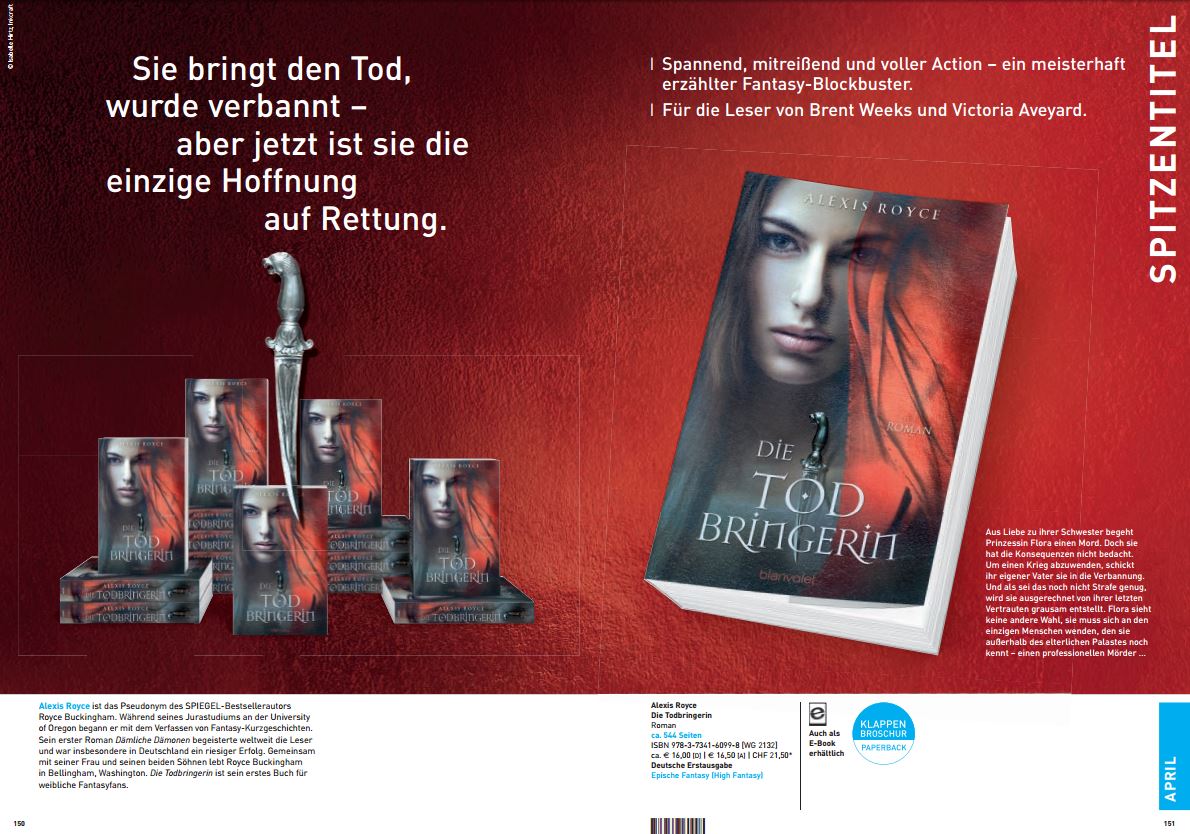
My dear, dear German friend Alexis’ first book is coming out. She writes fantasy books, like me!

Her debut novel, The Deathbringer, will hit German bookshelves in March/April of 2018.

The Deathbringer is the tender story of a princess…who becomes an assassin. Yeah!

She kicks ass. The book kicks ass. Everyone kicks ass! Including my publisher, who hired Alexis on my recommendation. I hope fans are as into her work as I am.

The rights will be shopped in the US soon (when the time is right).

Until then, good luck Alexis!

The Mapper Series on Paper

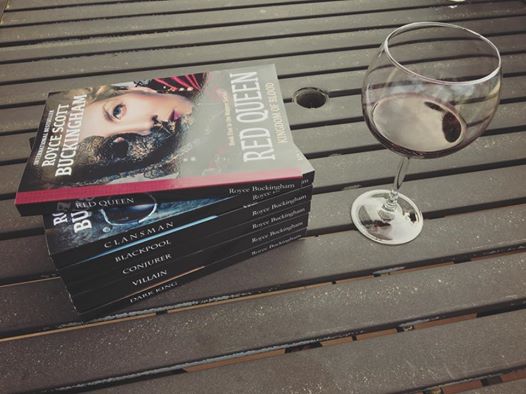
Formatting books for print is not for the faint of heart when the author focus is writing stories. It took a few months and some hair pulling. Today we celebrate with all six books in the Mapper Series available for U.S. readers in both print and Ebooks! For some back story, the series did phenomenally well in Germany when Book I: Die Karte Der Welt, hit the bestseller list. Book Two: Der Wille Des Konigs was a prequel to the first and then Book Three: Die Rubinrote Konigin followed. Learn more about the series here.

For the U.S., we decided to re-order the books  and break them down from three 700-pagers to six smaller books. We are incredibly pleased with the results. Self-publishing does have its perks.


Spark Your Writing Career with Competitions

By Royce Buckingham

My 16 year old son just earned 1st Place for his composition in the Washington State Young Composer’s Project. While I understand that this news is most exciting to my immediate family, it reminds me of how important contests were in building my writing resume and ultimately leading to my first deal.

I started by submitting short stories to contests, wrote and submitted my first novel (which is still in my desk drawer, by the way), and then moved on to screenplays. First, I chose regional contests and then expanded to national opportunities. With each new honorable mention, second place, and outright win, I gained the confidence and inspiration to continue developing my craft.

Eventually, my entry into the Academy Nicholl Fellowships earned a semifinal finish, which led to my first book sale and a movie deal with 20th Century Fox.

Here are the things I looked for when choosing which contests to enter:

Price: Most budding authors don’t have a ton of money to throw around. Make sure the cost is in line with the size and reputation of the contest.

Is the contest reputable? Find out how long its been around. Check out past winners. Research what others have said about it. Review the list of  judges.

Exposure: Make sure success in the contest will get people to take you seriously at the next level. Also, what type(s) of promotion does the contest offer, and is there a solid web and social media presence?

Feedback: You need to hear what others think about your work. Contests that include critiques by judges are extremely valuable to improve your storytelling and evaluate whether to continue developing and marketing the story you submitted or chalk it up to experience and move on to new material.


Interesting Concept for Branding an Author

It takes much more than a riveting story to grow a brand and successfully market titles. – Christian Smythe

With so much content out there, traditional and indie publishers are looking for innovative ways to market their authors. Christian Smythe suggests a few interesting concepts here.


Query Letters

I’ve been writing query letters for a while now, so you’d think I have it down. Yet its important to adjust to changes in personnel, technology and industry expectations, I found this column by Gus Sambchino helpful.  Check it out!

(This column excerpted from GUIDE TO LITERARY AGENTS, from Writer’s Digest Books.)

Writing Tips from Kent Messum

Top 10 lists are all a matter of the opinion. What speaks to one person might not to another. I find them helpful, however, to see where my experiences align with others and to gain new perspective. In this list, for instance, #s 2, 3, 8, 9 and 10 resonate the most for me and are similar to my thought process and practice of writing. What speaks to you?

1. Don’t write linearly: Don’t set out to write something from beginning to end. A story is meant to be read from front to back, but not necessarily created that way. If you have an idea for writing the sixth chapter first, then start there. The epilogue can even be the first thing you put down on paper, then work your way back. Scattered chapters will eventually be filled in, and it will force you to look at the story from different angles, which may present different ideas or new approaches. You’d be surprised how well this works when a whole book starts coming together. It’s also great for getting around writer’s block.

2. Have two or more projects on the go: Speaking of writer’s block, having more than one project on the go is never a bad idea. Although focus and dedication are paramount to completing a work, sometimes you inevitably get stuck. It’s good to be able to move on to something else instead of feeling frustrated and stagnant. You don’t have to have a few big projects happening either … maybe you’re penning a novel, but also some short stories and an article or two.

3. Be your own editor: There are days where I have difficulty writing altogether, so I’ll switch to editing my stories rather than trying to create them. Never assume it is someone else’s job to fix your mistakes. Find all the errors first, and deal with them yourself. The more polished and refined your work is, the more favorably it will be received when you’re finally ready to present it.

4. Ask for (and take lots of) punishment: It is well worth finding yourself a professional writer or editor and asking/paying them to look at your work. Tell them to give you highly critical feedback with no sugarcoating. Let them go so far as to be cruel too, just so you really get the point. There is a lot of rejection and criticism involved in the publishing industry. Getting accustomed to it sooner than later is advantageous. If you want to be serious about your writing, then you’ll need to know everything wrong with your writing. Accepting and understanding the harsh realities of your shortcomings is a most important step to getting better.

5. Disconnect: Twitter, Facebook, Instagram, Pintrest, the Internet in general … we know how invasive social media and technology is in our lives these days. We also know that it can be good for promotion, building a brand, and having an online presence. But you know what else social media and technology is really good for? Procrastination, distraction, and countless wasted hours. Being able to unplug for long periods of time is more important than you may think. All those tweets you’ve posted might have added up the word-count of half a novel by now…

6. Learn what good writing is: Honestly, there’s so much terrific writing out there, but there is also considerably more garbage as well. I’m constantly surprised by how many people don’t know the difference between the good and the bad. Art is subjective, true, but it isn’t that subjective when you remove ignorance and replace it with education. Duke Ellington said it best: “There are two kinds of music. Good music, and the other kind”. The same applies to writing.

7. Have your own workspace: It’s trendy nowadays to take your laptop to coffee shop or bar and write in public. I even advocate a change of environment/atmosphere when writing feels stifled. But I believe it’s more important to have and maintain your own private workspace, a spot you can call your own with a desk and preferably a door you can close when you need to shut out the world in order to create your own.

8. Dedicate to the craft: Serious writing is not something you merely do if or when you can find the time. It’s not just for Sunday afternoons, or the occasional evening, or a few hours a week when you can give it some attention. Make the time, and make lots of it. Tackle the craft daily and dedicate a generous portion of your existence to honing your skills. You’re only going to get out of it what you put into it, and serious writing requires a lot of investment.

9. Time management: When it comes to the hours or days you’ve reserved for writing, make sure you stick to your guns. Consider it sacred. To most other people, your ‘writing time’ is merely ‘flexible time’. They will invariably think that you can cancel, minimize or postpone working when it suits you (or them). Tell these people that your personal work time is not negotiable; much like theirs isn’t at their day jobs. You don’t need a regimented schedule, but you do need to clock in the hours.

10. Remember the Three “P’s”: I’ll admit there’s still a hell of a lot more to say on the topic of writing tips, but what it all comes down to in the end are three things I believe writers need to remember above all else: Patience, Perseverance, and maintaining your sense of Purpose.

Here’s the link to the Messum’s column in Writer’s Digest.

Column by J. Kent Messum, author of 2015 novel HUSK (July 2015, Penguin UK). HUSK was optioned for an international TV show by Warp Films in the UK. Messum is an author who always bets on the underdog. He lives in Toronto with his wife, dog, and trio of cats. His first novel BAIT won the 2014 Arthur Ellis Award for ‘Best First Novel.’ 

MONSTERS! Are they scary anymore or just our BFF’s with serious issues.

I’m sharing this article  I wrote that ran a while back on Smack Dab in the Middle – a blog for Middle Grade Author. I encourage you to check out the site for great ideas on books for Middle Grade Readers, but I’ve copied and pasted below if you’d like to stay here to read it. I hope you enjoy reading it as much as I enjoyed writing it. 

MONSTERS!

We have always had a fascination with monsters. From the time of the big three—Dracula (vampire), Frankenstein (zombie), and the Wolf Man (werewolf)—to the age of the pretty vampires and sensitive werewolves, Americans have literally eaten up the myth of the monster in all of its forms.

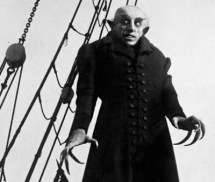
One of the interesting things that has happened over the years is the humanizing of these creatures. The vampire was originally seen as a shambling, grotesque beast returning from the dead to haunt Europeans in their myths and legends. In his movie debut, the vampire was Count Orlock of Nosferatu fame. Here’s a snap:

Compare this handsome young man (above) with a modern interpretation of the gruesome beast below:

Weird, huh? The same sympathetic treatment has been given to Werewolves (Patricia Briggs) and even Zombies. These perfectly good monsters who were once mysterious (ie. not understood) have been turned into our neighbors, our BFF’s, and even objects of desire who reveal their inner feelings and have been, it turns out, misunderstood. To that, my question is…where’s the scary?

I guess it’s no secret that many, many, many-many-many, modern YA monsters are not monsters at all, but instead just humans with issues.

When I set out to write a monster story back in 1997 or so, I had no idea that the trend was to personify monsters, anthropomorphize them, if you will. I thought they should just be scary and mysterious and kill you, preferably via eating. For my DEMONKEEPER series, I chose (you guessed it) demons. I took a traditional approach and made the bad monster bad. I had it eat kids, not date them. I chose demons because demons come in all shapes and sizes, and not all are evil; some are just annoying. Thus, I could have my monster and comic relief as well. In this way, I retained the traditional monster and tapped into our visceral, Neanderthal fear of being eaten alive by a wild animal (thank you ancestors), and I was able to play with lesser demons at a lower threat level (“hey dude, don’t virus my ipad”).
But was I watering down the monster myth too?

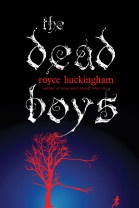
When I handed in my first draft of my subsequent book, THE DEAD BOYS, to my editor, John Rudolph (then at Putnam), he asked me if I really wanted it to be spooky. “Of course!” I said. He then proceeded to cut half of the book in the first edit. HALF! I just about had a heart attack. Talk about scary. But there was a method to his Mr. Hyde madness. He had cut all of the humor from the book. And the monster (a kid-eating tree) was delivered without any “softening.” It was relentless. It never winked and had a sensitive side. It didn’t joke around with you after school. It-just-ate-you. Period. Evil. Scary. No dating. No prom. No misunderstood-ing. It liked to eat boys. Yum! I rewrote half the book, and darn but if John wasn’t exactly right. It was spookier. Several book awards and fan letters about sleepless nights followed. Check the covers of the DEMONKEEPER series (above) vs. THE DEAD BOYS (below). Which is spookier?

The phenomenon of making monsters relatable and sympathetic is probably a spectrum. King Kong-mammal/sympathetic/less scary. Alien-insectile/not sympathetic/very scary. And so there is no right or wrong, just differences in approach and effect. Thus, as a writer, it is important to be aware that the more you understand the beast, the less scary it is. So make choices based upon the tone you wish to convey, before your editor cuts half of your book. As a reader, choose your monsters with this in mind. Do I want a drama with creatures? Do I want a genuinely scary story? I know which I’d choose. But that’s just me. I like spooky.

Boo!

Royce

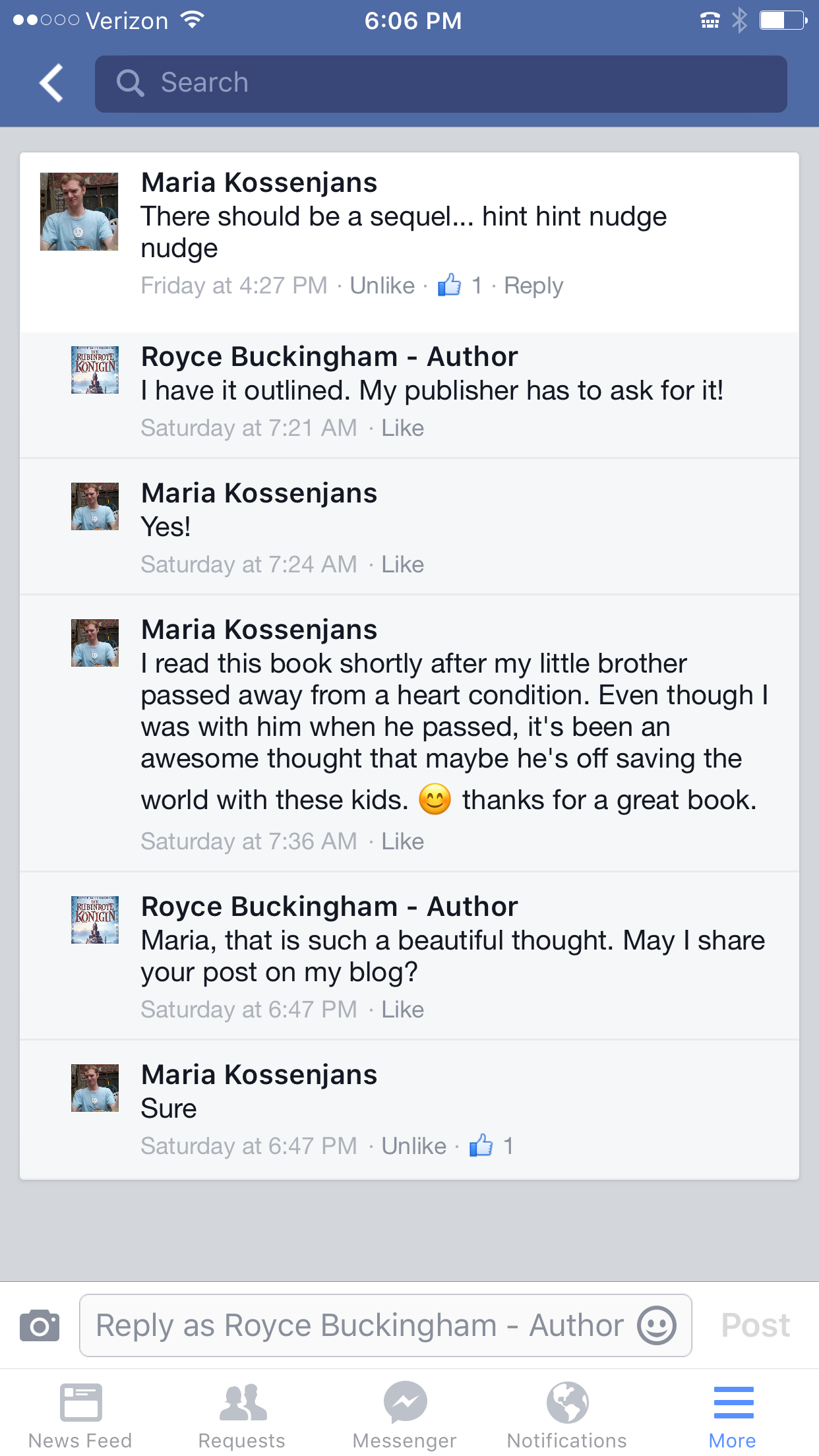
Heartfelt post from fan who lost a loved one

I received a very moving comment from a fan of The Terminals.  Maria has given me permission to share…

terminals-fan-1-croppedterminals-fan1


Authors: Do you have stories
of readers responding
similarly to your work?

Readers: What fictional
work has inspired or
comforted 
you?

Would love to hear your comments below…

Great Marketing Tip: Customer Reviews

I have recently gotten the rights back to some of my books and also have books that are successful in Germany but have not yet found a home with a publishing house here in the U.S. Hence, I have entered the ranks of the hybrid author, a phrase I first heard coined by NY Times international bestselling author Bob Mayer. This presents an interesting new challenge in marketing. Here’s a helpful article from BookLife on getting customer reviews. Hope you find it as helpful as I did.


Create a free website or blog at WordPress.com.

Up ↑